
Jigsaw Puzzles
What began as a geography lesson in 1760s London became the world's most beloved pastime.
The Beginning of Jigsaw Puzzles: The history of the modern jigsaw puzzle can be traced back to a London mapmaker named John Spilsbury. During the 1760s, he began mounting printed maps onto wooden boards and cutting them into pieces along geographical boundaries. The idea was to help children learn geography by putting the maps back together. These early puzzles were called dissected maps, and while they looked quite different from the jigsaw puzzles we know today, the basic idea was much the same.
From Education to Entertainment: It's doubtful that Spilsbury imagined his educational maps would eventually lead to one of the world's most popular hobbies. Over the years, jigsaw puzzles evolved from expensive wooden teaching aids into affordable entertainment for people of all ages. They've remained popular through the arrival of movies, television, video games, and the internet. Even with all those other ways to spend our free time, there's still something appealing about sitting down with a box of puzzle pieces and seeing what you can make of them.
The Appeal of Jigsaw Puzzles: I think one of the things that makes jigsaw puzzles so enjoyable is that you can work on them at your own pace. There's no need to rush, and you don't have to finish everything in one sitting. You can spend a few minutes sorting pieces, work on a particularly tricky section, or lose an entire afternoon without realizing it. And there's something satisfying about watching a picture slowly come together, one piece at a time.
The Origin
Spilsbury's Invention
A geography lesson that started something much bigger.
The First Dissected Maps: In the 1760s, London mapmaker and engraver John Spilsbury began making what he called dissected maps. He mounted printed maps onto thin wooden boards and cut them into pieces along geographical boundaries. The idea was to help children learn geography by putting the maps back together. These early puzzles were handmade and relatively expensive, so they were primarily purchased by families who could afford educational toys of this kind.
A Growing Interest: Spilsbury's idea caught on, and he went on to produce dissected maps showing different parts of the world. Other mapmakers and publishers eventually began making their own versions, helping the idea spread beyond its original audience. By the late 18th century, dissected maps had become an established type of educational toy in Britain. What began as a clever way to teach geography was gradually developing into a form of entertainment in its own right.
The Evolution of the Jigsaw Puzzle: Those early dissected maps were quite different from the jigsaw puzzles we're familiar with today. Instead of the interlocking tabs and notches we usually see, the pieces were cut along geographical boundaries and simply fitted together. You needed to recognize the shapes and locations of the different regions to complete the map. Over time, puzzle makers began experimenting with other subjects and more complicated cutting patterns, eventually developing the interlocking pieces that became a familiar feature of modern jigsaw puzzles.
John Spilsbury set out to make learning geography a little more interesting. More than 250 years later, we're still putting pieces together, although most of us aren't studying for a geography lesson.
Timeline
London mapmaker John Spilsbury begins mounting printed maps onto thin wooden boards and cutting them into pieces along geographical boundaries. These early dissected maps are designed to help children learn geography and are among the earliest examples of what would eventually become the modern jigsaw puzzle.
Dissected maps become increasingly popular as educational toys in Britain. Because they are handmade and relatively expensive, they're mainly purchased by families who can afford them. Other publishers begin producing their own versions, helping introduce puzzles to a wider audience.
Puzzle makers begin using subjects other than maps, including historical events, religious scenes, animals, and illustrations of everyday life. What started as a geography lesson gradually develops into a form of entertainment as well as education.
Improvements in woodworking tools, including treadle-operated fret saws, allow puzzle makers to cut more detailed and complicated shapes. Interlocking pieces become increasingly common, helping establish the familiar style of jigsaw puzzle we recognize today.
Cardboard puzzles become increasingly common as manufacturers develop more efficient ways to produce them. Unlike their wooden counterparts, cardboard puzzles can be made in larger quantities at lower cost, helping make jigsaw puzzles affordable for a much wider audience.
The Golden Age
Depression, Tradition & Revival
How jigsaw puzzles became a favorite pastime during difficult times.
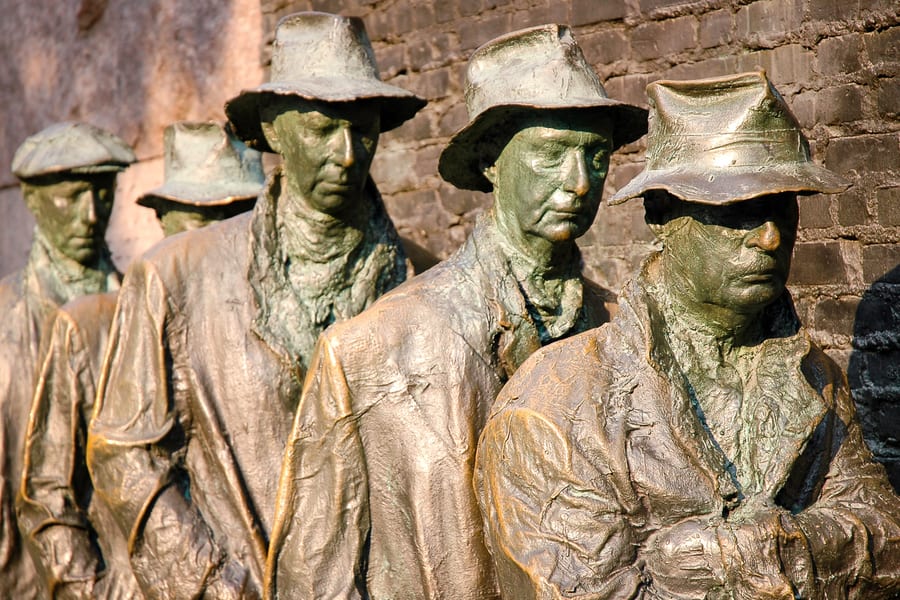
The Great Depression Puzzle Boom: The Great Depression might seem like an unlikely time for jigsaw puzzles to become enormously popular, but that's exactly what happened. During the early 1930s, Americans were buying puzzles in remarkable numbers, with historical estimates suggesting sales reached around 10 million per week at their peak in 1933. Puzzles offered an affordable way to pass the time, and they were something friends and families could enjoy together. When money was tight, an evening spent working on a puzzle could provide hours of entertainment without costing very much.
Cardboard and Wooden Puzzles: Cardboard puzzles were especially popular during the Depression because they could be produced inexpensively and sold at prices more people could afford. Wooden puzzles were still available, though, including beautifully crafted examples with unusual piece shapes and intricate cutting patterns. Some featured what collectors call whimsy pieces, shaped like animals, people, or familiar objects. Companies such as Par Puzzles became known for their high-quality wooden designs, while later makers, including Stave Puzzles, carried on the tradition of handcrafted wooden jigsaws. Today, many of these puzzles are sought after by collectors.
The Puzzle Revival of 2020: Jigsaw puzzles experienced another surge in popularity during the COVID-19 pandemic in 2020. With people spending more time at home, many turned to puzzles as a way to relax, stay occupied, and take a break from their screens. Some manufacturers reported dramatic increases in demand, and certain puzzles became surprisingly difficult to find. It's interesting that an activity with roots going back more than 250 years could still provide so much enjoyment during a time when nearly everything else seemed to be changing.
In 1933, at the depth of the Depression, an estimated 10 million jigsaw puzzles were sold in America every week. The puzzle has always known when it is needed.
Timeline
Jigsaw puzzles become enormously popular during the Great Depression. At the height of the craze in early 1933, historical estimates suggest Americans were buying around 10 million puzzles every week. Affordable cardboard puzzles offered families a way to enjoy hours of entertainment without spending much money.
While cardboard puzzles dominate the mass market, companies such as Par Puzzles produce beautifully crafted wooden jigsaws. Many feature intricate cutting patterns and specially shaped pieces known as whimsies. These handcrafted puzzles appeal to customers looking for something a little more unusual, and surviving examples are still appreciated by collectors today.
During the 1940s and 1950s, mass-produced cardboard puzzles continue to make jigsaws accessible to a wide audience. Wooden puzzles remain available, particularly from specialty makers, but cardboard becomes the familiar choice for everyday family entertainment.
Founded in 1974, Stave Puzzles helps introduce a new generation of collectors to handcrafted wooden jigsaws. Known for their intricate cutting patterns, unusual shapes, and sometimes deliberately tricky designs, these puzzles show that traditional craftsmanship still has a place in a world of mass-produced entertainment.
Jigsaw puzzles experience another surge in popularity during the COVID-19 pandemic. With more people spending time at home, demand rises sharply, and some manufacturers struggle to keep their most popular designs in stock. Once again, puzzles prove to be a welcome way to relax, stay occupied, and enjoy a little time away from the screen.
The Collection
Collecting Jigsaw Puzzles
From antique wooden maps to beautifully crafted modern jigsaws.

Something for Every Collector: There are plenty of ways to approach collecting jigsaw puzzles, and what interests one collector might be completely different from what appeals to another. Some people enjoy tracking down antique and vintage puzzles, particularly those with unusual artwork or an interesting history. Others prefer modern wooden puzzles, with their intricate cutting patterns and clever designs. And, of course, there's nothing wrong with simply collecting puzzles because you like the pictures and enjoy putting them together. That's a perfectly good reason in my book.
Antique and Vintage Puzzles: Antique jigsaw puzzles can be fascinating little pieces of history, especially the early dissected maps made during the 18th and 19th centuries. Finding one in good condition can be difficult, particularly if you're looking for an example with all its original pieces and packaging. When considering an older puzzle, it's worth paying attention to its condition, completeness, and whether there's any information about who made it. Missing pieces, damaged artwork, and worn boxes can affect its value, although rarity and historical significance also play an important part.
Modern Wooden Puzzles: If you're interested in modern wooden jigsaw puzzles, Stave Puzzles in Vermont is a name worth knowing. They've been making handcrafted puzzles since 1974 and are particularly well known for their unusual piece shapes, intricate cutting patterns, and clever tricks that can make solving them more challenging than you might expect. They're certainly not inexpensive, but there's a great deal of craftsmanship involved. Even if you're not planning to buy one, they're interesting examples of just how creative puzzle making can be.
Some puzzles are worth keeping because of their history, some because of their craftsmanship, and some simply because you enjoyed putting them together. I think there's room for all three in a good collection.
Timeline
Early dissected maps and other wooden puzzles from the 18th and 19th centuries offer an interesting look at how jigsaw puzzles developed. Surviving examples can be difficult to find, especially with all their original pieces. Their age, condition, and historical significance make them particularly interesting to collectors.
This period includes everything from beautifully crafted wooden puzzles to the inexpensive cardboard jigsaws that became enormously popular during the Great Depression. Many feature distinctive artwork and packaging that reflect the styles of their time. They're a great way to explore puzzle history without necessarily spending a fortune.
Mass-produced cardboard puzzles became a familiar part of family entertainment during these decades. Many collectors enjoy them for their nostalgic artwork, unusual subjects, or connections to particular manufacturers. They're also a fun way to revisit the illustrations, advertising, and popular culture of the period.
Companies such as Stave and Liberty Puzzle continue the tradition of beautifully crafted wooden jigsaws. Their puzzles often feature unusual cutting patterns, specially shaped pieces, and designs that add an extra challenge beyond simply completing the picture. They're appealing to collectors who appreciate both the craftsmanship and the experience of solving them.
Explore the other puzzle traditions.
The full puzzle history spans tavern puzzles, 3D metal and wood puzzles, and the broader mechanical puzzle tradition.