

Tavern Puzzles
Tavern puzzles have been entertaining and frustrating people for generations, proving that even the simplest designs can be surprisingly difficult.
Tavern puzzles are a traditional type of mechanical puzzle, usually made from iron or steel rods, rings, and sometimes rope or chain. The idea is generally pretty straightforward: remove a ring or other piece from the puzzle, or figure out how to put it back on. Of course, knowing what you're supposed to do and actually doing it are two very different things. A well-designed tavern puzzle makes the solution seem almost impossible, even though everything you need to solve it is right there in front of you.
Tavern puzzles take their name from the tradition of mechanical brainteasers associated with old taverns and public houses. It's easy to imagine someone setting one down on the bar and challenging a friend to figure it out over a drink. Stories about tavern keepers offering puzzles as wagers are part of the lore surrounding them, although the details of those early traditions aren't always well documented. Whatever their exact origins, they're certainly the sort of challenge that can keep a group of people entertained for quite a while.
One of the things I find most interesting about tavern puzzles is how they make you rethink what you're seeing. A ring might appear to be completely trapped, with no possible way to remove it. But these puzzles generally aren't about strength or forcing pieces past one another. They're about understanding how the different parts can move and interact. Sometimes all it takes is looking at the puzzle from a different angle, or realizing that a space you thought was closed isn't quite as closed as it appears.
Origins
From China to the Alehouse
A Long History of Mechanical Puzzles
Mechanical puzzles have a surprisingly long history, and some of the earliest known examples come from China. One of the best-known is the Chinese Rings puzzle, sometimes called the Nine Linked Rings. The challenge is to remove a series of interconnected rings from a frame, following a particular sequence of moves. What makes this puzzle especially interesting is that the solution follows a mathematical pattern related to binary counting. It's a clever design that has fascinated mathematicians and puzzle enthusiasts for centuries.
Metal ring and disentanglement puzzles eventually became popular in Europe as well. Many of these puzzles could be made using fairly simple materials and traditional metalworking techniques. A blacksmith could fashion an intriguing challenge from a few pieces of iron, sometimes adding a loop of rope or leather. The finished puzzle might look fairly ordinary, but getting its pieces apart could keep someone occupied for quite a while. It's not hard to see why puzzles like these became associated with taverns and other gathering places.
The Chinese Rings puzzle also attracted the attention of European mathematicians. In the 16th century, Italian mathematician Gerolamo Cardano described a version of the puzzle in his writings. He recognized that there was more to it than simply moving pieces of metal around. Behind those rings was a mathematical sequence that could be studied and understood. Of course, you don't need to know the mathematics to enjoy the puzzle, although understanding the pattern certainly makes solving it easier.
The person who already knows how to solve the puzzle always makes it look easy. It's when you try it yourself that things get interesting.
Timeline
The Chinese Rings Enter the Written Record: Italian mathematician Luca Pacioli describes a linked-ring puzzle in his manuscript De Viribus Quantitatis. Around the same period, Chinese writings also mention the Nine Linked Rings. The puzzle's exact origins remain uncertain.
Cardano Explores the Ring Puzzle: Italian mathematician Gerolamo Cardano includes the linked-ring puzzle in his book De Subtilitate. His description helps establish the puzzle in European mathematical literature, where it also becomes known as Cardano's Rings.
Ring Puzzles Gain Wider Attention: By the late 17th century, linked-ring puzzles were familiar in several European countries. Mathematician John Wallis also studied their underlying mathematical patterns.
Mechanical Puzzles Become Commercial Curiosities: Mechanical puzzles begin appearing more clearly in commercial records. An English catalogue from 1787 lists several puzzles, providing evidence of an emerging market for these entertaining little challenges.
The Victorian Puzzle Boom: Improved manufacturing and a growing market for home entertainment help mechanical puzzles become more widely available. Wire disentanglement puzzles, interlocking designs, and other brainteasers appear in commercial catalogues and puzzle collections.
Traditional Puzzles Find New Enthusiasts: Contemporary puzzle makers continue producing metal disentanglement puzzles, alongside increasingly elaborate mechanical designs. Collectors and enthusiasts help keep traditional puzzles alive while introducing them to new generations.
The Mechanics
The Cleverness Behind the Iron
Why solving a tavern puzzle isn't always as straightforward as it looks

One of the things that makes tavern puzzles so interesting is that the solution usually has very little to do with strength or forcing pieces together. A metal ring might appear to be completely trapped, with no opening large enough to remove it. But that's where the cleverness of the design comes in. The challenge is to figure out how the different pieces can move around one another, often in ways that aren't immediately obvious.
Something I've learned from working with these puzzles is that the most obvious approach is often the wrong one. You might spend several minutes trying to pull a ring off a frame, only to discover that you actually need to move it farther onto the puzzle first. Sometimes the solution involves several moves that don't seem to accomplish anything until you reach the final step. It's a good reminder that making progress doesn't always mean moving directly toward your goal.
Some mechanical puzzles take this idea quite a bit further. The Chinese Rings puzzle, also known as the Baguenaudier, is a good example. Depending on the number of rings, solving it can involve dozens or even hundreds of individual moves. There's a mathematical pattern behind the sequence, closely related to Gray code, a method of representing binary numbers in which only one bit changes at a time. It's fascinating to think that a traditional mechanical puzzle can demonstrate principles that also have applications in modern computing.
Sometimes the hardest part of solving a puzzle is getting past the idea that you already know how it should work.
Timeline
The ring, rope, chain, or other movable piece that you're trying to remove from the puzzle. It often looks completely trapped, which is where the challenge begins.
The main structure of the puzzle, usually made from iron or steel. Its bends, twists, and loops create the obstacles you'll need to work around to free the movable piece.
The series of movements needed to separate the pieces. Sometimes it's surprisingly simple, while other puzzles require quite a few steps. The trick is figuring out the right sequence, which isn't always what you'd expect.
This is where the puzzle maker gets clever. The design naturally draws your attention toward what looks like the obvious solution, even though the actual answer may involve moving the pieces in a completely different direction.
The Collection
Collecting Tavern Puzzles
What makes a good puzzle worth keeping, and a few things to consider when building your collection.
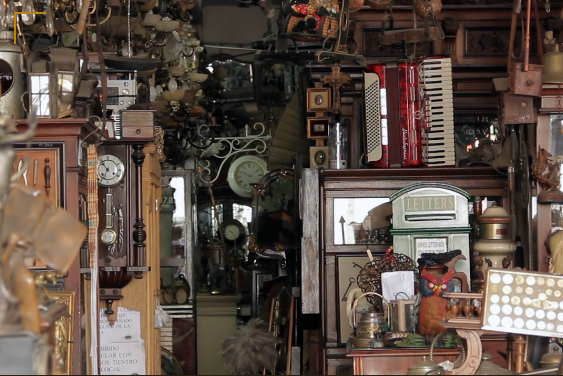
If you're interested in collecting antique metal puzzles, there's quite a bit to learn about their history and construction. Older examples can be difficult to identify and date accurately, especially since many traditional designs have been reproduced over the years. Things like wear patterns, the type of metal used, and how the pieces were made can offer clues about their age. If you're considering spending serious money on an antique, it's worth doing some research and buying from someone who knows what they're selling.
One of my favorite examples of traditional tavern puzzles comes from Tucker-Jones House, the makers of the Tavern Puzzle Collection. They've been producing handcrafted metal puzzles since around 1980, using traditional blacksmithing techniques. Their collection includes both adaptations of older puzzle designs and original creations. What I particularly appreciate about these puzzles is their solid construction. They're meant to be handled, worked on, and enjoyed, and some of them can be surprisingly challenging.
If you're just getting started with mechanical puzzles, Hanayama's cast-metal puzzles are another option worth exploring. They're quite different from traditional tavern puzzles, both in how they're made and how they look, but many rely on similar ideas involving the movement and separation of interconnected pieces. They come in a variety of difficulty levels, so there's something for beginners as well as experienced puzzle solvers. They're also nicely made and look pretty good sitting on a shelf.
For me, collecting puzzles isn't just about having them on display. Half the fun is figuring out how they work, and the other half is trying to remember how to put them back together.
Timeline
Older mechanical puzzles can be fascinating pieces of history. Look for construction methods, materials, and wear that are consistent with their supposed age. Genuine examples can be difficult to find, and identifying them accurately may take some research.
During the 20th century, mechanical puzzles were produced using a variety of materials and manufacturing methods, including bent wire and cast metal. Vintage examples can be an interesting and sometimes affordable way to explore older puzzle designs.
Traditional metal puzzles are still being made today. Craftsmen such as those at Tucker-Jones House continue to produce hand-forged designs that combine traditional construction methods with clever mechanical challenges. These are puzzles made to be handled and solved, not simply admired.
Modern cast-metal puzzles, including Hanayama's popular series, offer a different approach to mechanical puzzle design. Their carefully shaped pieces, smooth finishes, and wide range of difficulty levels make them appealing to both casual puzzle enthusiasts and serious collectors.
Explore the other puzzle traditions.
The full puzzle history covers 3D metal and wood puzzles, jigsaw puzzles, and the broader context of the mechanical puzzle tradition.